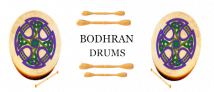
The Bodhran – An Introduction to Irish Traditional Music
There is much debate as to where and when this humble frame drum originated; however, trade routes from Persia may hold clues as its historical source.
Since Sean O Riada began exploring different playing techniques on his bodhran in 1945, its development has advanced far faster than any other Irish traditional instrument. Pioneering innovators such as Peadar Mercier and John Joe Kelly have helped push its potential further still.
Origins
Although various drums had existed throughout Irish history, the bodhran only came to prominence during the traditional music resurgence of the 1960s led by musicians like Sean O’Riada. At that point it became widely recognized as a musical instrument used mainly as noisemaking or primitive rhythm instruments.
The popularity of the bodhran can be partially attributed to its versatility; it can be used to produce melodious ringing beats instead of simply urgent taps by altering pressure applied underside the skin and using an internal tone ring that prevents atmospheric conditions from altering tension levels on its tensioned skin.
Construction
The bodhran is a frame drum made of goat skin stretched over a wooden frame. Often cross-braced in back for stability and standard practice is to place one hand through it to rest lightly on its head while tapping with a short double-ended beater known as a cipin.
Origin of this humble farm tool remains unknown, however experts speculate it may have evolved from a skin and wood frame tool used for transporting peat and potatoes and is linked with tambourines popular in southern continental Europe. Its name derives from Irish words meaning dull or numb.
Sound
This instrument consists of a wooden hoop covered with goatskin on one end, played using a stick called a beater (pronounced bo-deer). Sometimes also referred to as dallan.
Expert bodhran players can alter the sound by touching various parts of the drum and its skin, altering its pitch and tone accordingly.
Traditionally, the Bodhran was used as a ritual drum during Celtic ceremonies and festivals such as St Stephen’s Day on December 26th where men known as Wren Boys provided entertainment in exchange for food or money from local residents – this Christian practice may have pagan origins dating back millennia.
Techniques
Professional bodhran players possess an artful understanding of how to highlight and embellish tunes’ rhythms with their bodhrans, skillfully dampening skin with their hand for soft sounding tone.
Traditional practitioners used their hands alone to play drums; more recently, a stick known as a cipin has become more commonly employed – two ends held directly above the head is known as Kerry style while only using one end results in top-end style.
Peadar Mercier and Johnny “Ringo” McDonagh played an essential role in popularizing bodhran music among formal ensembles, expanding its scope from rural celebrations to concert halls. John Joe Kelly has since carried on this tradition.
Styles
Playing the Bodhran can do more than improve rhythm and timing skills; it also fosters connection to Irish culture while creating a sense of community among musicians. Furthermore, the instrument provides musicians with an outlet to express themselves creatively while honing their individual style.
The bodhran is typically played using a stick called a “cipin.” You can either hold both ends directly over the bodhran head for Kerry style playing or you can place one end over it for top-end style.
Position of the cipin in relation to the lower bodhran head can produce various tones when struck with the tipper, producing rhythms and accents by different techniques used when striking it with it.
Buying a Bodhran
Selecting the ideal bodhran is an extremely personal decision, so select one with dimensions you can comfortably hold and maneuver, produce sounds you enjoy playing and feels right in your hands.
Decide whether or not you prefer a tunable or non-tunable bodhran. Bodhrans with tuning systems allow you to alter skin tension according to temperature changes; this feature is especially important since animal skins vary with temperature changes.
Most top quality bodhrans utilize Lambeg or Vellum skin. Vellum has been utilized since antiquity as it produces an intricate sound with incredible sustain.


