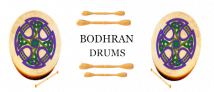
The Irish Bodhran
Even though its size may seem diminutive, the bodhran is an integral component of Irish music. It can easily be identified by its signature goatskin head attached to one side of its drum body.
The skin of a bodhran can be tightened by applying clear water or applying very mild heat, or by vigorous rubbing with the palm of your hand. To loosen its grip on you, vigorous rubbing with palm of hand works just as effectively.
It is a frame drum
The frame drum or bodhran is a type of drum commonly found in Irish music. This circular instrument can be played both by hand and with a stick (cipin). The drum features one head made of goat or calf skin stretched over a wooden frame; damping this skin by hand allows for variation in pitch and sound characteristics.
Since its revival during the folk music revival of the 1950s, bodhran has become an essential instrument of Irish Traditional Music. Reintroduction is typically credited to Sean O Riada – who invented modern bodhran playing techniques – which led to it appearing more frequently among bands.
Peadar Mercier was another key figure in the growth and evolution of bodhran playing, pushing its boundaries forward through his signature style. He was soon followed by Mel Mercier as well as other top players like Johnny McDonagh and John Joe Kelly who continued the tradition he established.
It is made of wood
A bodhran is a single-headed frame drum made from goat, calf or synthetic skin stretched over a wooden frame. To play one, place it on one’s knee and strike back of skin using short double-ended stick known as “tipper.” A bodhran produces deep bass sounds while it can also produce crisp notes with its short double ends known as tippers.
The Bodhran is an iconic Irish instrument and can often be found at Irish music sessions around the world. Its mesmerizing sound draws people together for celebration; while every culture has their own musical tradition, Ireland stands out as having a distinct one; two key instruments which define Irish folk music include Bodhran Drum and Tin Whistle as two examples.
It is a percussion instrument
The Bodhran is an Irish frame drum available in various sizes. To play one, players use a “tipper”, usually made of goat or calf skin stretched across its frame. While traditionally performers used their hands alone to beat the drum, nowadays many employ cipins held between one of their hands in order to control and dampen its sound.
Bodhrans are used in Irish music to produce a range of sounds from urgent drumbeats to melodious, ringing rhythms. First popularised during the 1960s when Sean O Riada introduced it into Ceoltoiri Chualann by Sean O Riada; Peadar Mercier and Johnny “Ringo” McDonagh then continued its development by refining playing techniques which have gained international renown for this instrument.
It is played with a beater
Ireland is famous for many things, from its distinct cuisine to the exceptional music produced there. One such tradition that stands out is the bodhran drum. While its appearance resembles that of a standard snare drum, players of this instrument use an unconventional beater called a “cipin”, striking it repeatedly with their hand using an up-and-down movement on an “icin”. Sean O Riada popularized this instrument among Irish musicians in the 1960s when Ceoltoiri Chualann members joined up-beat rhythm patterns on an up-down pattern against this beater cipin cipin beater beater stick known as an up/down beater stick was added by Ceoltoiri Chualann.
The Bodhran is easy to learn, yet requires dedication. Practice playing it with friends who also know how to play instruments; the name Bodhran should be pronounced boo-dawn for best results.
It is a traditional instrument
The Bodhran is a traditional Irish instrument which became increasingly popular after the 1960s. First used as part of St Stephen’s Day ritual drumming for Wren hunts, today it has become mainstream musical instrument. Played using two beaters (Kerry or West Limerick style) or just one (top-end style).
Bodhran players often embellish their drums with intricate Celtic spirals, GAA county colors or family coats of arms to enhance its look and playability. Furthermore, they use a key which loosens or tightens skin tension in order to control tension during play and help enhance rhythm and sound production by the player.


