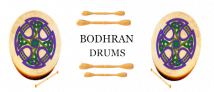
The Irish Bodhran
Although many might consider the bodhran to be an ancient Irish musical instrument, its history is actually much shorter. Sean O Riada brought it into prominence on Ireland’s music scene with Ceoltoiri Chualann in the early 1960s.
Today, Irish music holds a prominent place in both Irish and international cultures, evolving further as new innovations emerge.
Origins
The exact origins of the bodhran remain uncertain; it is an Irish frame drum which resembles a tambourine without its jingles, traditionally played with either hands or with a stick known as a cipin.
The first known reference to a bodhran can be found in a 15th-century medical transcript that describes a patient with swollen bellies as making sounds similar to drum (bhodhran).
There have been various theories concerning its origin, such as it being from Central Asia. Sean O’Riada popularized the bodhran during Ireland’s traditional music resurgence in the 1960s when he included it with Ceoltoiri Chualann and later with the Chieftains, becoming an integral part of Irish culture since that time.
Construction
The bodhran, with its circular frame of wood and playing surface traditionally made of goatskin, has become synonymous with providing rhythmic foundation for Irish tunes from lively reels to melancholic ballads. Musicians employ various playing methods on this instrument for producing an array of sounds from this simple instrument.
The bodhran is a single-headed drum similar to a large tambourine without its jangling parts, used to produce music by resting it on one’s knee and striking it with a short double-ended stick called a tipper or bone. The skin may be attached in various ways: nailing stapled or glueing are just three options available to players.
Sound
Ceoltoiri Chualann mesmerized audiences both live and recorded performances with their mesmerizing performances on the bodhran, taking it out of its traditional informal settings into theatres and concert halls for audiences to witness their musical genius. Additionally, Ceoltoiri elevated Irish folk music as an authentic cultural experience.
At first, bodhrans were played using either the hands or sticks known as cipins; some even featured jingles attached to their rim. With time however, their sound began to improve: players began refining how they hit the drum by removing any attached jingles and dampening its skin using dampening hands for greater depth of sound. Nowadays tunable bodhrans further refine this sound with players such as Peadar Mercier or Johnny “Ringo” McDonagh taking this drum to new heights of success.
Rhythms
The Bodhran is one of Ireland’s favorite musical instruments, an intricate frame drum with its own distinct playing style that can be played using different rhythms and techniques.
Skilled players of the bodhran can express many different emotions with its sounds – from urgent taps to more melodious ringing beats. Regular oiling with dubbin or neatsfoot oil will extend its lifespan over many years.
Oiling a bodhran once every three or four months is recommended in order to preserve its natural tone and flexibility, keeping its original tone alive. Furthermore, practising to popular Irish tunes like reels can also help hone your musicality skills and advance musical talent.
Techniques
The bodhran is an accompaniment instrument and should complement and embellish the rhythm of music it’s playing, never trying to drive the beat like an epic drumming hero, nor attempting to solo itself.
Traditionally, the bodhran was played using only hand movements; today however, most performers prefer using a small stick called a cipin, tipper, or beater instead. Striking with this tool requires certain wrist movements which beginners may struggle to master.
Finding an experienced teacher or taking online lessons from skilled players is recommended to learn bodhran techniques correctly, with McNeela Music of Dublin offering a free introductory lesson as part of their program.
Musicians
Today, the bodhran is an integral component of Irish music sessions and its widespread adoption can be attributed to Irish composer Sean O’Riada who included it in Ceoltoiri Chualann in the 1960s.
The bodhran is played using one’s hands or with a lathe-turned piece of wood known as a beater, tipper, stick or cipin. A skilled player can manipulate this instrument’s sound using their free hand in order to change its pitch from sharp taps into melodious ringing beats with ease.
John Joe Kelly is recognized as the world’s premier bodhran player. His dynamic and contemporary playing style has modernized bodhran’s outdated image. John Joe performs with Flook and Mike McGoldrick bands as a percussionist; in demand globally.


