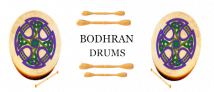
The Bodhran Drum
A bodhran is a frame drum composed of one head made from goat skin or synthetic material stretched over a wooden frame. The drum’s rim is often painted and cross bars may also be present although these features have become less prevalent over time.
Goatskin is often chosen for use on bodhrans, though other materials may include deer, calf and greyhound skin as well as special lambeg skin from Northern Ireland that produces its own distinct sound and can be extremely effective.
Origins
The bodhran was first used since 3000 BCE as an ancient frame drum; similar instruments can still be seen being played today in India, China, Africa and Australia. Sean O Riada first introduced this instrument into modern Irish traditional music through Ceoltoiri Chualann’s repertoire.
A bodhran is composed of flexible wood and covered by goat or calf skin attached with nails at one end.
The Bodhran is continually being updated by musicians such as Seamus O’Kane who pioneered thin lambeg skins that produce crisper sounds and allowed players to become more musical with their playing. Other musicians, including Johnny McDonagh and Mel Mercier have made significant contributions by adding new rhythms into Irish traditional music with their instrument.
Materials
Traditional Bodhrans were traditionally created from goatskin stretched over a wooden circular frame and secured with staples or tacks, although more advanced musical instruments can now be tuned for specific sounds.
When purchasing a bodhran, make sure that it suits you by trying it on and feeling how comfortable it is in your hand. Furthermore, try different sizes until you find your ideal match.
Practice rolls to expand your bodhran skills and practice 6/8 rhythms by playing along with jigs. Record yourself and listen back, so that you can see where improvements can be made; this is the most effective way of improving bodhran play. Finally, play with a metronome so as to refine timing and enhance tempo skills.
Techniques
There are various methods of playing the bodhran drum, but one of the simplest involves using your supporting hand to strike its goatskin head. This approach has been popular since centuries past and serves to highlight its rich, resonant tone.
Alternately, musicians may place the drum upright on their left leg with its goatskin skin facing upward. Next, they take a small wooden stick known as a “cipin or tipper”, held in their right hand (if they are right handed), and strike it against the rim of the drum to play music.
By shifting their hand pressure and position, players can manipulate the pitch and tone of their beater. This enables a wide variety of rhythms such as 4/4 Irish reels and 6/8 jigs to be created using this technique; additionally, leaving their left hand free for ornamentation of accents to each beat makes this approach particularly versatile.
Styles
The bodhran can produce an array of sounds depending on its use. You can play it by striking with either your hands or with a stick; its beater may be flat or angled; and how it’s held will alter its sound production; heel of hand will create sharp beats while flat of hand produces more subtle tones.
Since Sean O’Riada first introduced the bodhran into Irish traditional music, there have been many advances in drum making and playing techniques. People like Peadar Mercier, Johnny McDonagh and John Joe Kelly have contributed significantly to keeping it at its current status.
The Modern Bodhran library includes five performance presets to offer you a range of sounds and techniques.
History
The bodhran has quickly become one of the hallmarks of Irish music thanks to renowned musician Sean O Riada (deceased), who included arrangements for this drum into Ceoltoiri Chualann (now known as Chieftains).
Though many theories exist regarding its source, most experts agree that its roots lie with an ancient druidic frame drum believed to have traveled widely during trade routes.
Johnny McDonagh and Peadar Mercier, two notable bodhran players who developed new techniques; John Joe Kelly developed melodic styles; while innovative bodhran makers and tippermakers all contributed significantly towards developing this instrument.


