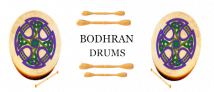
The Irish Bodhran
The Bodhran is an iconic symbol of Irish culture, made infamous through Sean O Riada who popularized its use with Ceoltoiri Chualann band during its 1960s popularity resurgence.
Bodhran players can adopt various grip positions when playing it, but two playing styles stand out among all others: Kerry or West Limerick style involves holding both ends of the beater directly above one’s head while holding both beaters above both ends – this technique is known as Kerry/West Limerick style.
The History of the Bodhran
Harte explores the origins and global influence of Irish bodhran as an instrument, from ritualistic usage to musical settings. Through interviews with players and scholars alike, this book sheds light on its global roots that include drums from northern Africa and the Middle East.
Historically, the Bodhran was utilized in ceremonial mumming rituals like Hunting of the Wren on Saint Stephen’s Day (December 26th). This tradition may date back as far as early Celtic civilization.
John Joe has become famous worldwide as a master bodhran player, known for his energetic playing style that has become immensely popular. Many younger bodhranists have even taken inspiration from him!
Its Sound
Traditional Bodhran players traditionally employed their bare hands; today it’s more common to use a stick known as a Cipin, which must fit each player appropriately; two ends should be used when playing Kerry style bodhran, while just one is preferred when performing West Limerick-style bodhran playing.
Modern bodhrans are frequently wrapped with electrical tape on its edges for insulation. This reduces unwanted tones and allows the instrument to focus more effectively on bass frequencies – ideal for contemporary Celtic bands without bass instruments as this instrument can fill that void.
Sean O Riada is widely acknowledged as the father of modern bodhran playing. Under his direction, more Irish Traditional Music bands started using frame drums in their performances and Tubular Bells was even recorded with him playing alongside Mike Oldfield!
Its Pitch
Under the care of an adept player, the bodhran can produce many sounds: from urgent commands to sobs or melodious ringing beats; its pitch can even change to suit whatever melody is being played.
Bodhran playing is an intricate art form requiring skilled hand-eye coordination and an uncanny rhythmic sense. Thankfully, there are a range of online resources for anyone wanting to learn this instrument – from beginner lessons through expert performances such as Josselin Fournel’s lively Irish drum solo.
Recently, bodhran players and makers alike have been exploring innovative techniques. One such innovation was implemented by Seamus O’Kane of Dungiven, County Londonderry; his system uses screws instead of finger taps to tension skin tension thereby eliminating atmospheric conditions’ influence on loosening or tightening of skin tension.
Its Tone
The Bodhran is a round frame drum with a goat skin head. Its rim is covered by white leather which has been tacked onto its hoops, while its length features jingles similar to a tambourine.
Bodhrans have experienced substantial evolution since the revival of Irish music in the 1950s, becoming an instrument commonly played across Celtic cultures.
Today’s bodhrans feature adjustable internal tone rings which can be tightened or loosen by means of screws, providing players with greater sound consistency while developing more precise playing techniques such as those employed by top end style players like Peadar Mercier and Johnny Ringo McDonagh. This technology makes the playing experience far superior!
Its Rhythm
Irish music’s rhythmic heartbeat lies within its bodhran. This instrument’s beat can communicate an urgent call to action or simply create an enjoyable melody. A skilled performer can alter this sound from sharp taps into melodious ringing beats, providing Irish musicians with their signature sound.
Bodhrans have evolved quickly from rural celebrations into grand theatre and concert hall performances since Sean O Riada established Ceoltoiri Chualann in the 1960s. This can largely be credited to Sean O Riada.
Since its introduction, the bodhran has become one of the most iconic instruments in Irish culture thanks to musicians such as Peadar Mercier (and later Mel Mercier), Johnny McDonagh and Christy Moore. Its signature drumming rhythm has become part of Irish heritage; even movies like “The Last of the Mohicans” feature its sounds.


