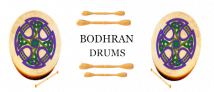
The Irish Drum Bodhran
The Bodhran is an integral part of Irish culture and traditions, playing a pivotal role in wren-hunting rituals on St. Stephen’s Day (December 26th).
Irish music has undergone significant modernization and innovation over time, reflecting both historic practices and novel methods of making music. Such innovations have ensured its place within Irish culture both past and present.
Origins
The Bodhran is an Irish drum which has transformed from its traditional ritual role into one with greater musical applications in recent times. Available in multiple sizes and featuring goat or calf skin stretched across an iron frame, its use has expanded greatly.
Origins are somewhat unclear; some suggest it evolved from tambourines brought over from Europe through trade relations; other theories point to origins in Persia or North Africa as potential origins of Irish folk music.
Sean O’Riada introduced the bodhran into mainstream Irish music during the 1950s, and its development has continued ever since. Thanks to innovators such as Peadar Mercier (and later Mel Mercier) and John Joe Kelly, it continues to thrive and evolve quickly today with innovations being introduced such as different skin types, frame depths/dimensions/tuning systems being implemented quickly.
Construction
A bodhran drum is composed of goatskin stretched over a circular wooden frame. This skin may be fastened to its framework through nailing, stapleing or glueing methods; glueing is recommended to ensure an efficient drum sound with good tone quality. Loose enough to stretch freely but tight enough not to fly off and damage weather conditions is optimal when selecting skin for drumming purposes.
Advanced bodhran players can shape the sound of their instrument using various striking techniques and parts of the tipper (a two-ended beater), to achieve various rhythms and textures – this versatility making the bodhran an indispensable element of Irish culture and music.
Ramin Djawadi’s soundtrack for “Game of Thrones” prominently features drum’s rhythmic beat as an integral element. It accompanies epic battles and Celtic-influenced cultures, providing another dimension of drama.
Techniques
Skilled players of the bodhran can produce an array of expressive sounds — from urgent taps and ringing beats, melodious sobs, and martial calls for action. Hinnerk Ruemenapf uses extensive interviews with drum makers, performers, scholars, and scholars from all around the globe to explore its global roots, gradual organological development and ever-evolving playing styles.
Beginning as noisy instruments with bells attached to their frames, over time bodhrans gradually developed more subtle tones as players like Peadar Mercier from The Chieftains, Christy Moore from Planxty or Johnny “Ringo” McDonagh refined playing techniques.
As part of an increasingly common trend, drum rims are now frequently covered with tape to reduce edge-loading, dampen unwanted overtones, and allow for better tuning of the instrument. Bodhrans are becoming increasingly popular among beginner musicians due to high-quality instruments with user-friendly tutorial videos.
Varieties
The Bodhran is the heartbeat and rhythm of Celtic music. Played solo or as part of musical sessions, this instrument provides a steady beat as well as accenting specific musical phrases. Furthermore, its traditional Irish folk tune accompaniment adds another layer.
The frame of a bodhran is typically constructed from wood such as ash, oak or birch and offers different tonal characteristics depending on which wood species is chosen as its base material. Denser woods tend to produce richer sound effects. Traditional models use goat skin drumheads; modern models may use synthetic skins which offer consistent performance regardless of climate change conditions.
Since the 1960s, bodhran popularity has skyrocketed across Ireland and nearby Celtic regions. Virtuoso players such as Peadar Mercier of The Chieftains, Christy Moore from Planxty and Johnny “Ringo” McDonagh from De Dannan have developed playing techniques which display its unique capabilities.
Sound
The Bodhran is an incredible instrument with the power to produce a variety of sounds and styles. When played by an expert player, its sound can evoke sobs, mirth or martial provocation; its tone can even be altered using one hand on its underside drum to dampen, pitch change or alter overall instrument tone.
Modern bodhran players such as Sean O Riada reintroduced frame drum bodhrans back in the 1960s. Since then, John Joe Kelly and Peadar Mercier have taken this instrument to new levels of musical innovation and musicality.
Bodhrans come in many different sizes, shapes and tuning options; innovative ideas are constantly emerging to keep up with these variations. Options range from various frame depths and dimensions to skin types and internal tunable options.


